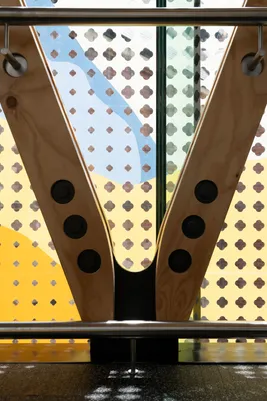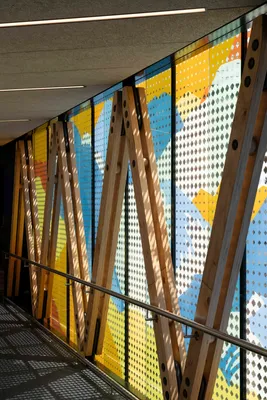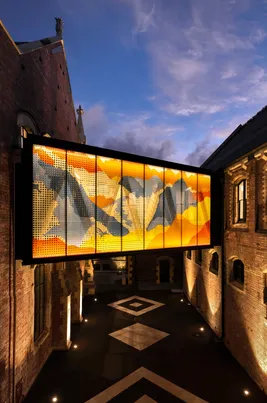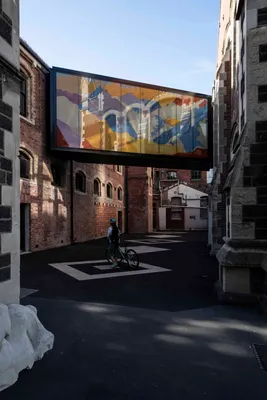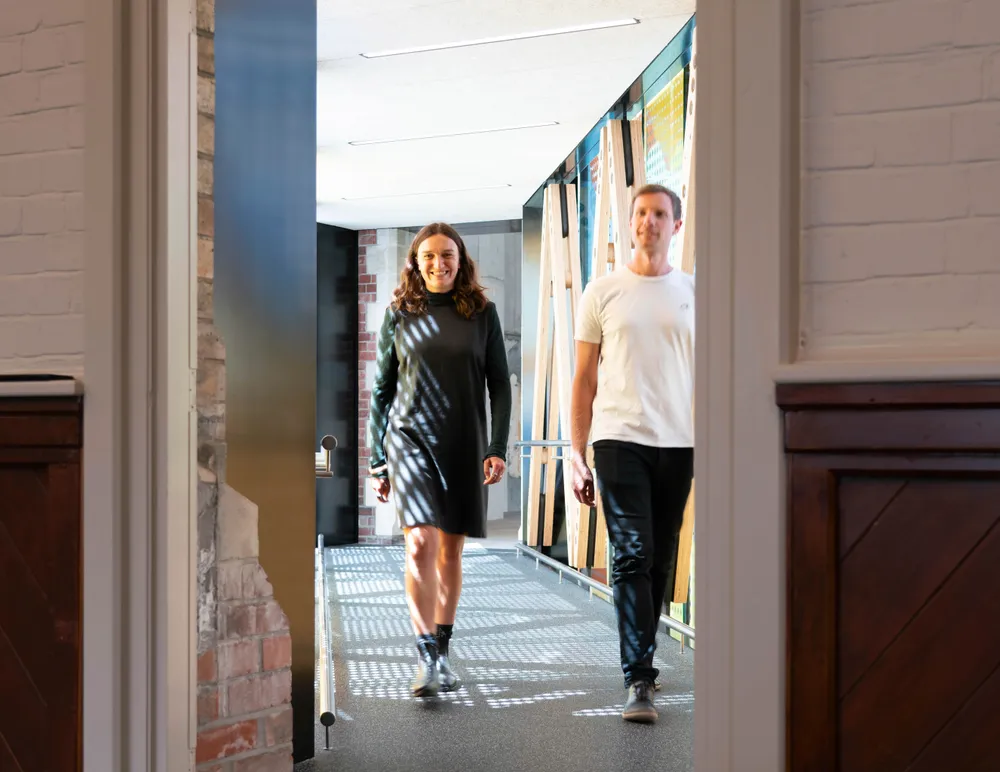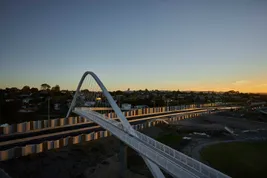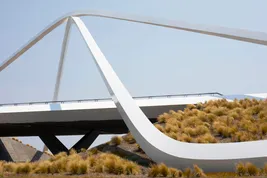

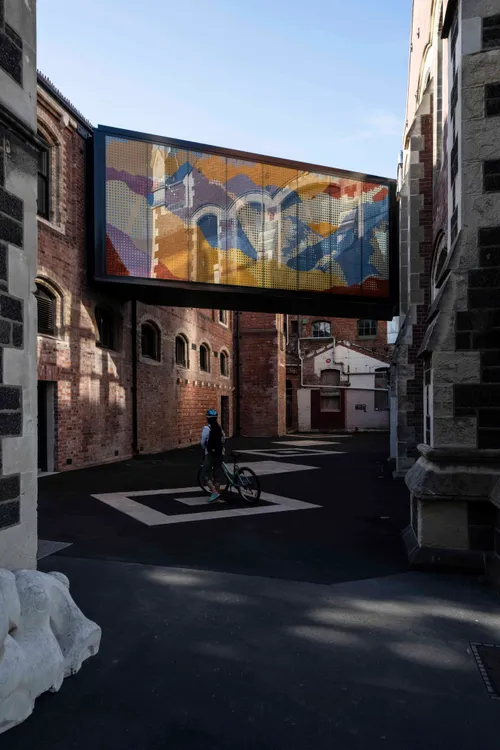
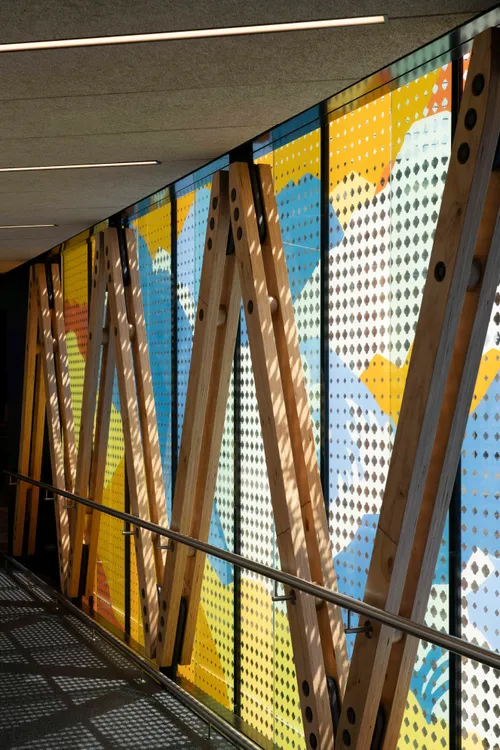
The bridge needed to be as much a feat of engineering as a modern form that looked at one within its heritage context: encapsulating the pedestrian walkway within a large truss structure supported at both ends by seismic movement joints. While the bridge is simple in shape and materiality, the outcome was generated using computational approaches to manage the designed glazing artwork within key architectural and structural relationships. Construction of the main structure and glazing were created off-site and swung into position, emphasising the exact installation with tight tolerances both on-site and in the digital modelling - a foil for the heritage context and celebrating the evolving creativity in which it is situated.
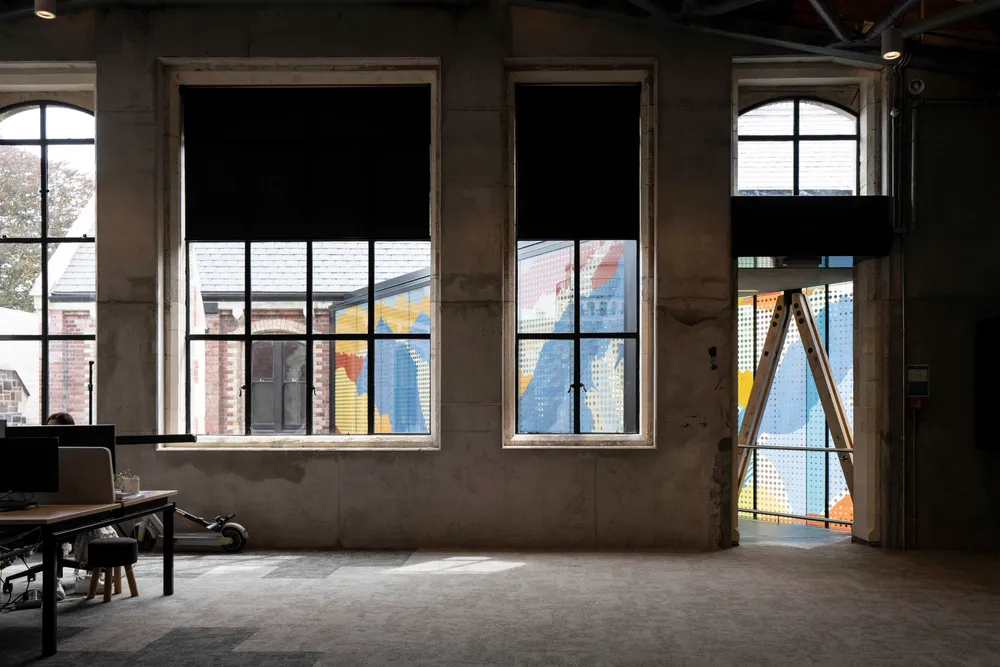
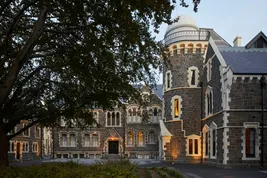
Early in the design process we worked closely with the heritage consultant, structural engineering, Council and our client to establish where openings would best be situated within the two existing façades. The selected areas made use of existing openings (being structurally efficient and complementing existing building language) and cost-effective alterations, while allowing for a unique and dynamic connecting bridge form.
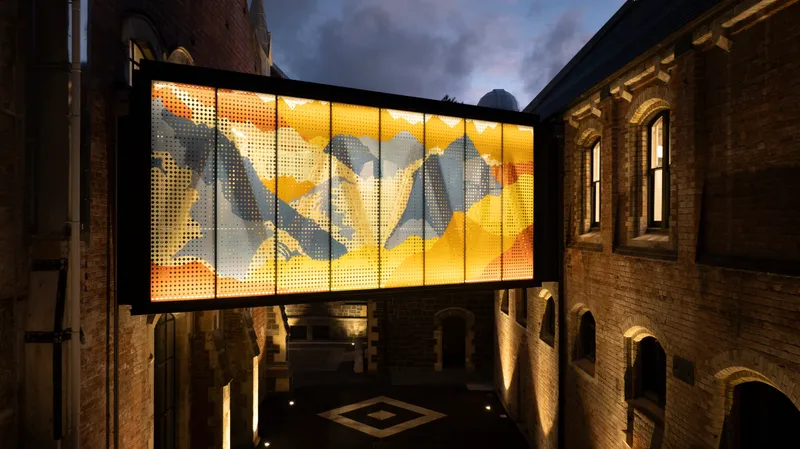
In collaboration with The Arts Centre, we decided to use the expansive glass façades as a canvas, a piece of art in itself. The abstract graphic draws inspiration from Rita Angus, a leading 20th Century New Zealand artist who studied at the old Canterbury College School of Art (on the current site). The abstract graphic takes a selection of her forms, incorporating techniques that create depth, and common colour themes that link to the surrounding brick and limestone façades.
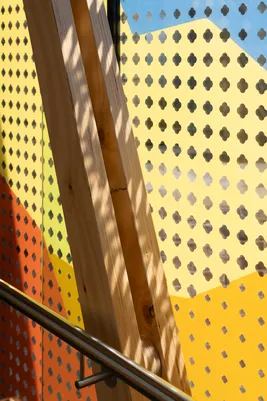
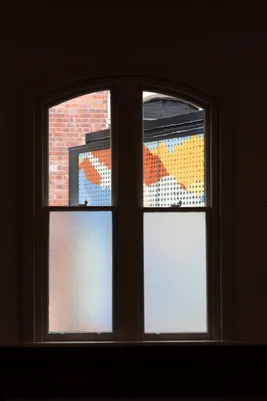
Perforations in the artwork graphic were designed as quatrefoil shapes, which vary in size to draw your eye across the artwork and provide a unique play of light in the interior. The glass also reflects surrounding buildings physically, providing another dimension to the façade as you move around the bridge, further overlaying depth, colour, texture and shape.
A vibrant and whimsical addition to the traditional brick-and-stone architecture seamlessly connects two sections of the Arts Centre, offering a visually striking contemporary juxtaposition that enriches both the historic and modern elements.