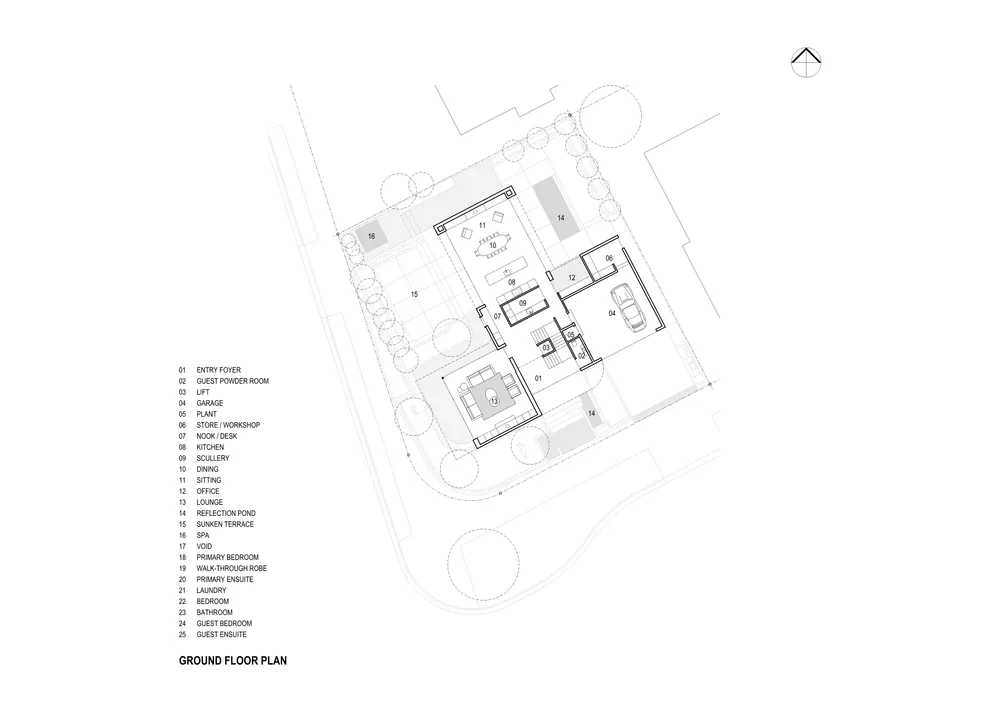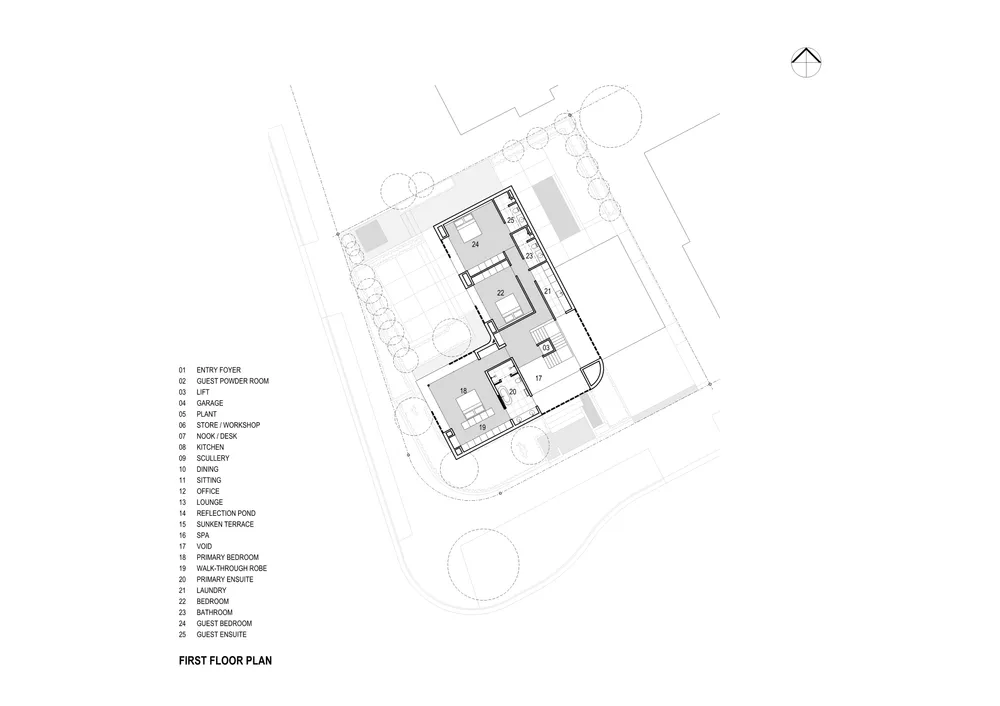
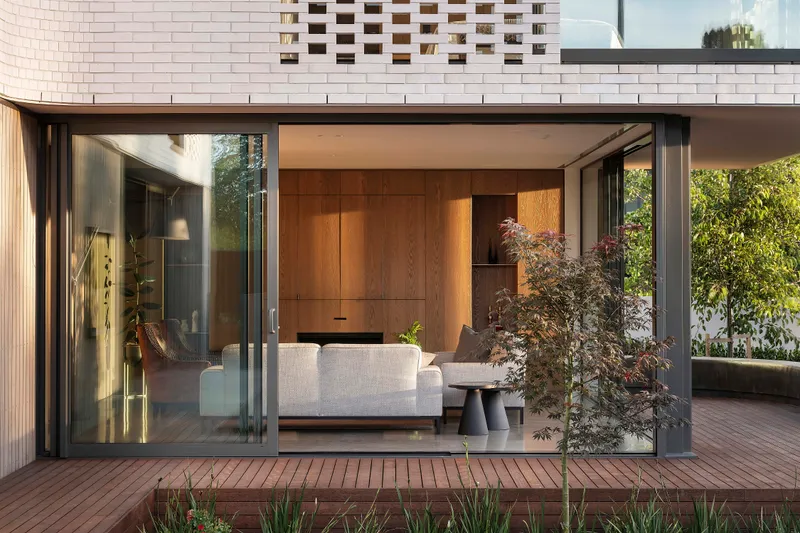
This project demonstrates a highly resolved response to complex planning, site, and long-term living requirements. A central design move is the integration of vertical circulation infrastructure, including a full lift, into the architectural core, future-proofing the dwelling for ageing-in-place while maintaining spatial clarity and cohesion.
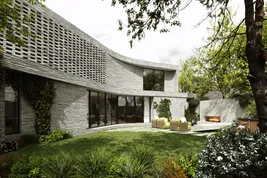
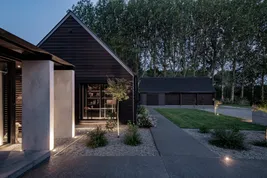
The ‘L’-shaped planning strategy is both an urban and environmental response, reconciling conflicting setback conditions while optimising solar orientation, wind protection, and outdoor amenity.
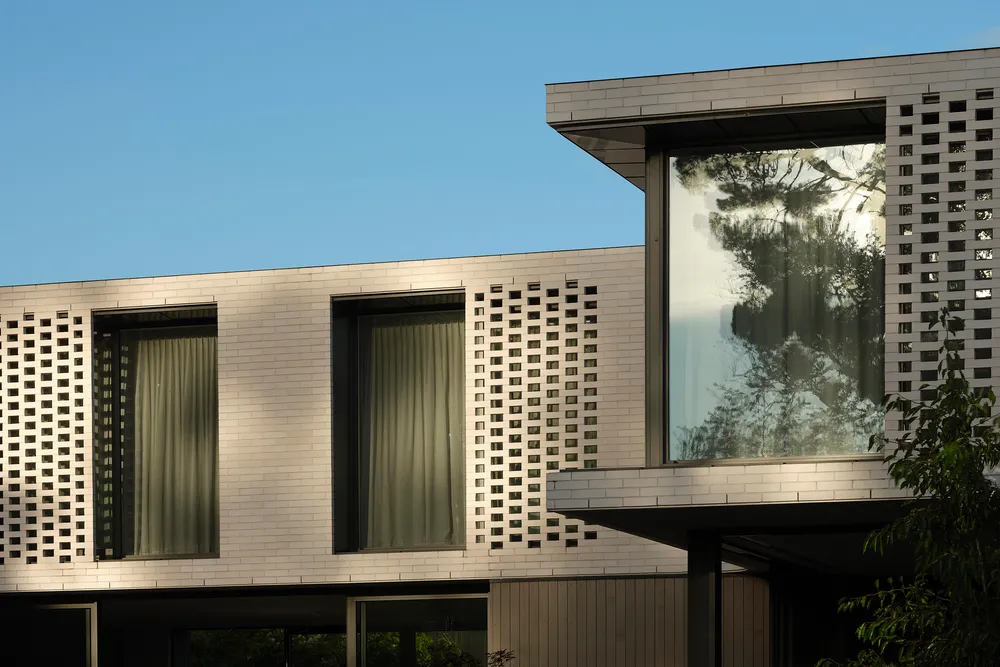
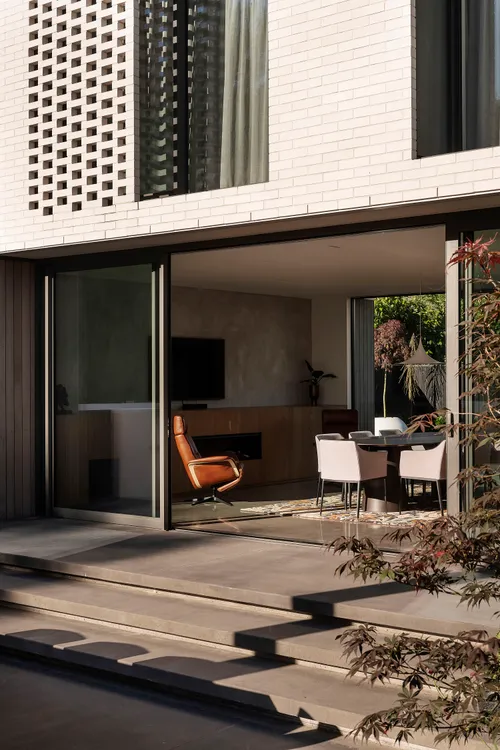
Outdoor living spaces are carefully calibrated, with recessed terraces and planted edges providing microclimate control and privacy without reliance on applied screening.
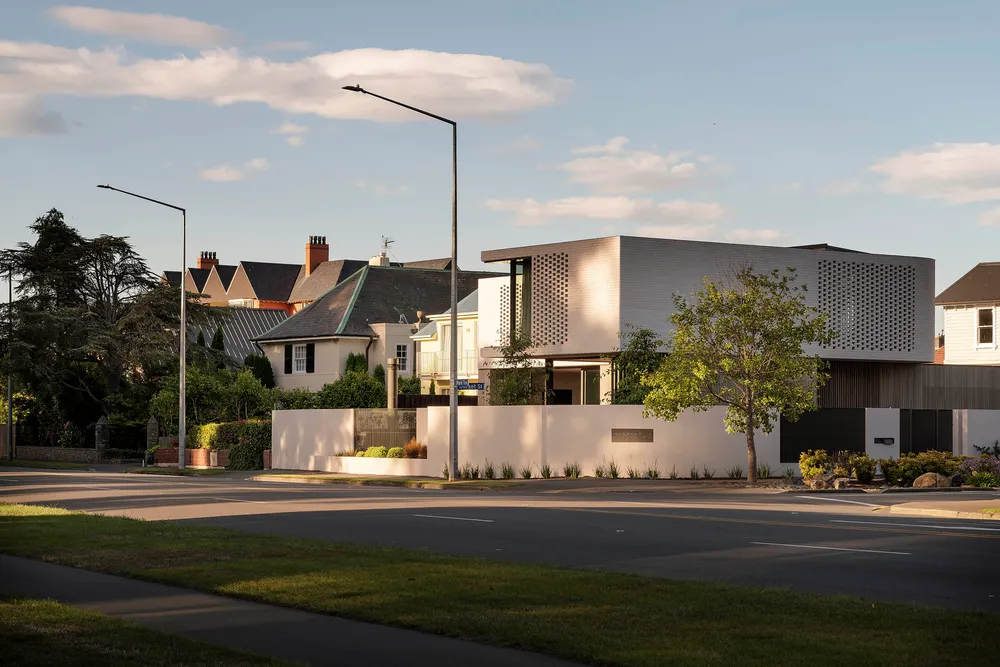
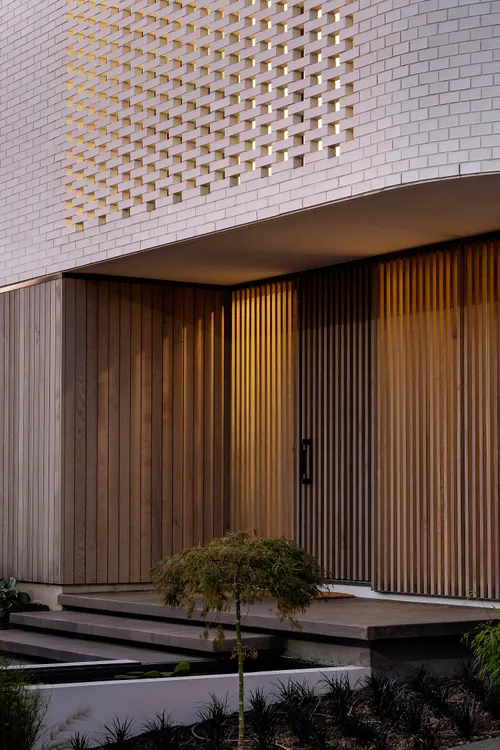
Material strategy is equally deliberate. A robust upper-level envelope of locally manufactured clay brick and pre-finished metal reduces long-term maintenance, while timber elements are concentrated at accessible ground level. Layered brick and timber screening elements perform multiple roles - modulating light, enabling passive ventilation, and softening the interface between public and private realms - demonstrating an integrated approach to performance, durability, and architectural expression.
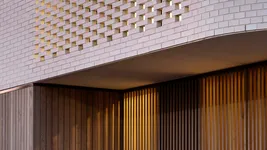
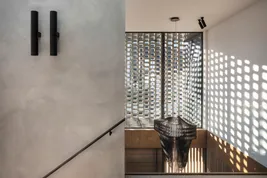
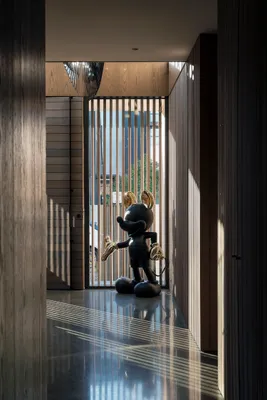
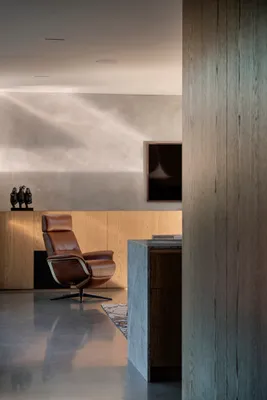
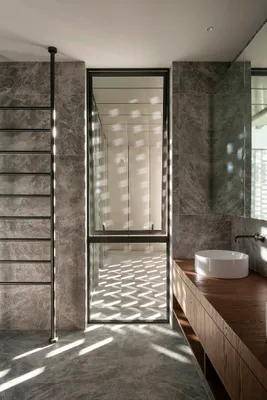
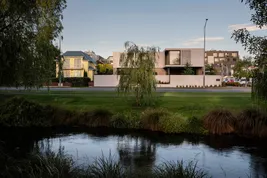
The design is planned to take advantage of natural light and passive ventilation, with east and west openings and generous overhangs to moderate solar gain during summer months and allow cross ventilation of the interior spaces.
Brick screens on the upper level provide daylight filtering to reduce overheating and allow a breezeway effect via opening panels behind. Minimal openings to the south elevation, accompanied by increased external wall depths for greater insulation and thermally broken aluminium with high performance glazing creates an efficient external envelope. Low maintenance and durable materials have been selected for longevity.
The custom clay brick is not only locally sourced, but is 100% recyclable, with waste and seconds being crushed and circulated back into the production material.