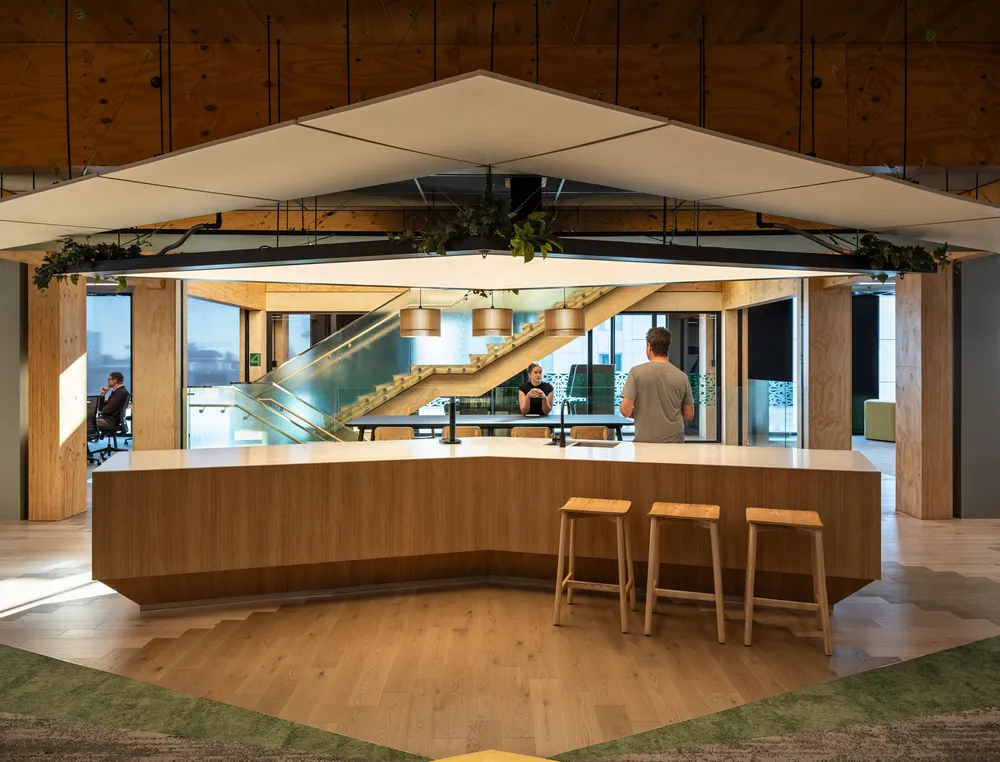
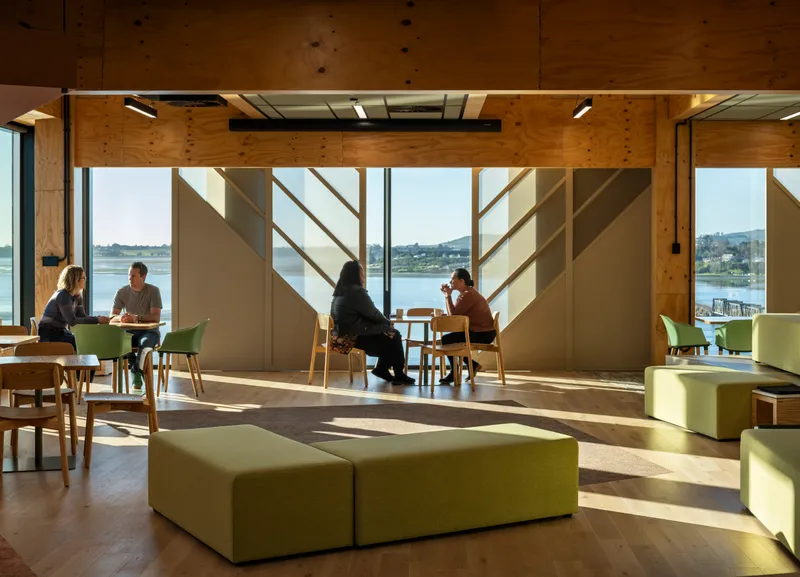
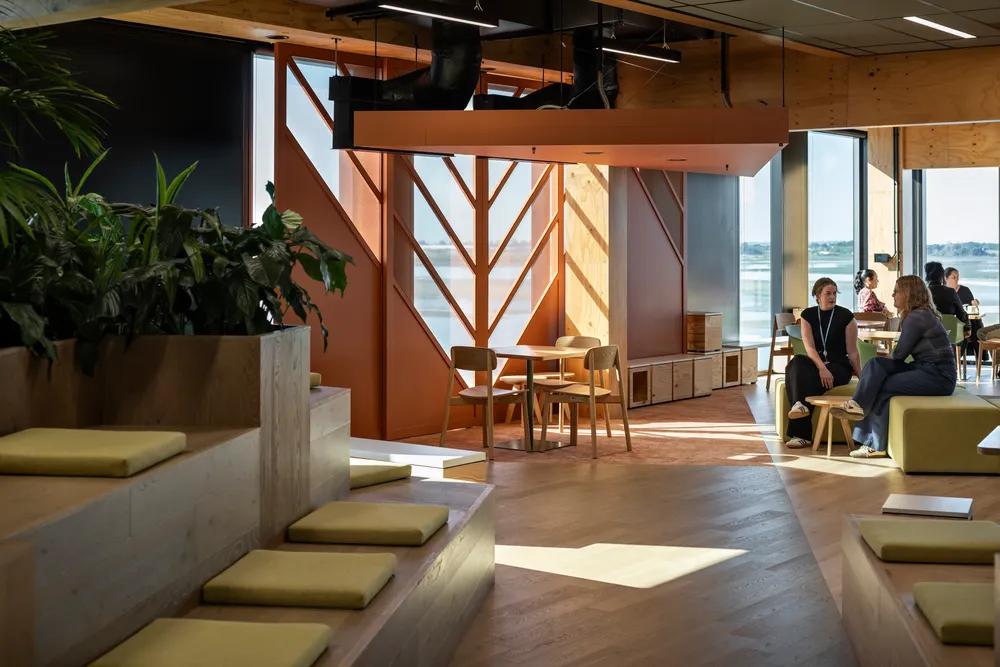
The brief was to create a high performing workplace designed to cater for up to 1000 staff, bringing together all their people under one roof. The spatial design is built around a centrally located CLT timber stair that connects each of the six main workplace floors to each other and to the Anchor Hub, carefully positioned to maximise and showcase the panoramic views for all staff.
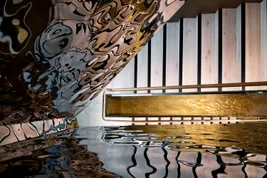
The stair showcases the use of mass timber further with minimal use of adorning materials – the raw end grain of the cross laminated timber is left exposed and an obscure glass balustrade with minimal fixings allows light to flow down through the atrium. The deliberate location at the heart of the workspace floor encourages movement and activity throughout the building, creating spaces for serendipitous meetings and brings disparate teams closer together.
To celebrate the uniqueness of the building, several strategies were introduced to keep the exposed mass timber visible - the first was the optimisation of the built environment - meeting rooms in particular - to only spaces that would be well used and were multi-purpose. The second strategy was to create a modular design that made many of the rooms independent from the structural grid and avoid the in-ceiling services zone. Thus, each built element needed to perform to a high acoustic standard and adapt to different uses of video conferencing, private meetings and public events.
Mareanui brings civic life back into the heart of Tauranga, gives Council staff a high-performing workplace, and shows what can be achieved when public and private sector partners work with real clarity around long-term value. What stood out to the judges was not one feature in isolation. It was the full equation: the commercial outcome, the environmental performance, the quality of delivery, the relationship with mana whenua, and the wider impact on Tauranga’s city centre.
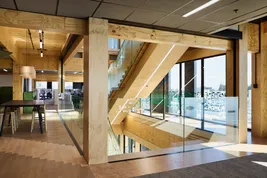
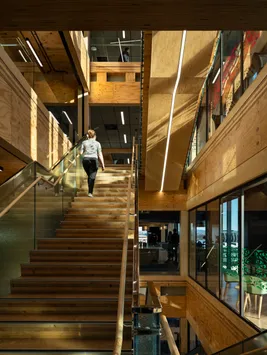
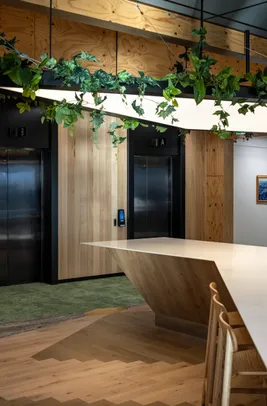
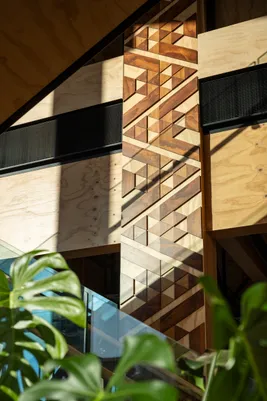


Sustainability has been central to the project from the outset, beginning with the base-build decision to adopt a hybrid mass timber structure. This low-carbon structural strategy shaped the interior fitout, with exposed timber beams, columns, and alternating CLT ceiling bays creating a strong visual connection to the building’s sustainable DNA and reinforcing the project’s commitment to responsible material use.
That strategy flowed through to the fitout, where material choices prioritised low embodied carbon product and sourcing from local suppliers. Marmoleum, cork flooring, sheep’s wool acoustic panels, and low-VOC finishes were specified, alongside the significant reuse of existing furniture, reducing both upfront carbon and construction waste while creating a productive and collaborative workplace environment. To complement the Green Star 6 base-build rating, the fitout is targeting a WELL Gold certification, placing occupant wellbeing at the centre of the design.