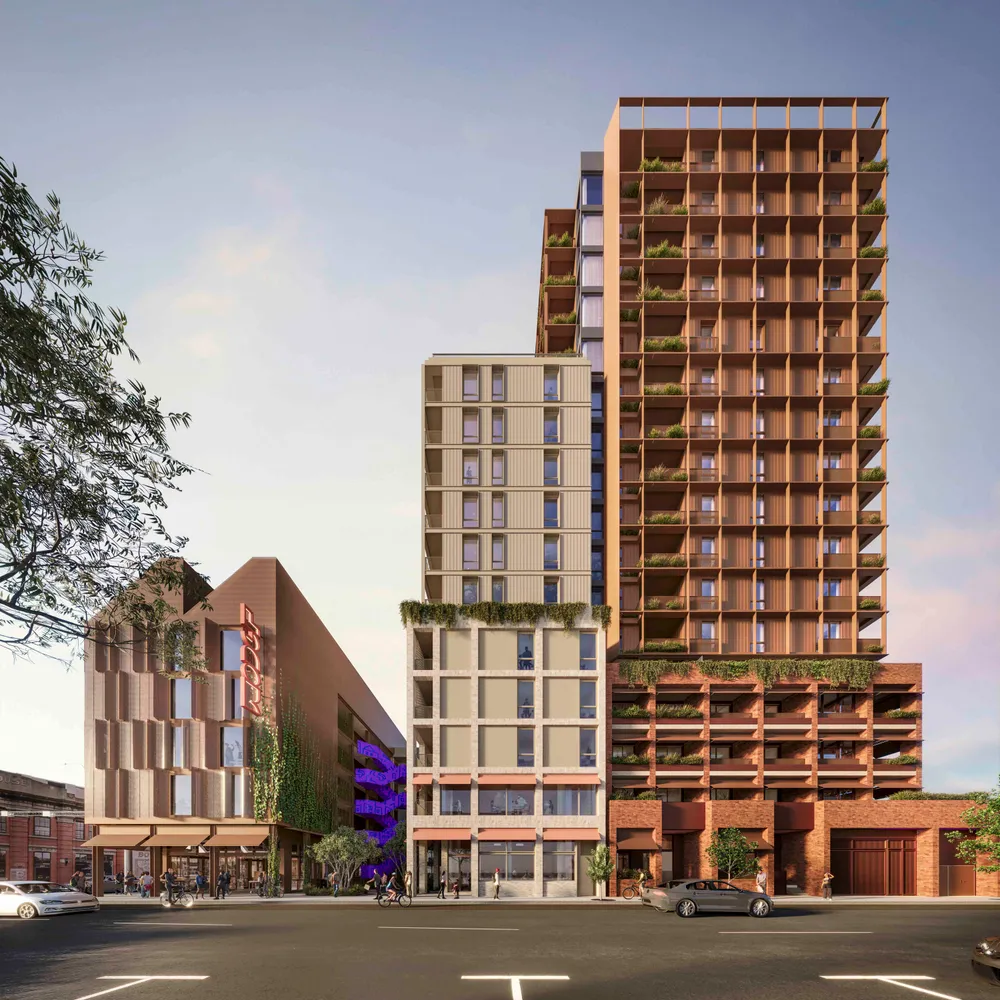


Constraint as Catalyst
The project uses the constraints of carbon, affordability, programme, construction efficiency and a complex inner-urban site as drivers for innovation. Rather than treating these pressures as limitations, they inform a more intelligent approach to how the building is designed, manufactured and delivered.
Material Intelligence
Mass timber forms part of a lower-carbon material strategy, with material choices considered against embodied carbon, performance, constructability, availability and whole-of-life value. The approach demonstrates how the right material can be selected for the right application rather than prescribing a single construction solution.

Prefabricated Structural Systems
Mass timber creates opportunities for structural elements to be manufactured off-site and assembled efficiently on-site. Greater precision and repeatability can help accelerate construction, reduce waste and minimise disruption on the constrained site.
Kit of Parts + Repeatability
The repetition inherent in approximately 230 Build-to-Rent apartments creates an opportunity to rationalise apartment types, components and interfaces. Designing these as repeatable systems supports greater construction efficiency and consistency while maintaining architectural quality and resident amenity.
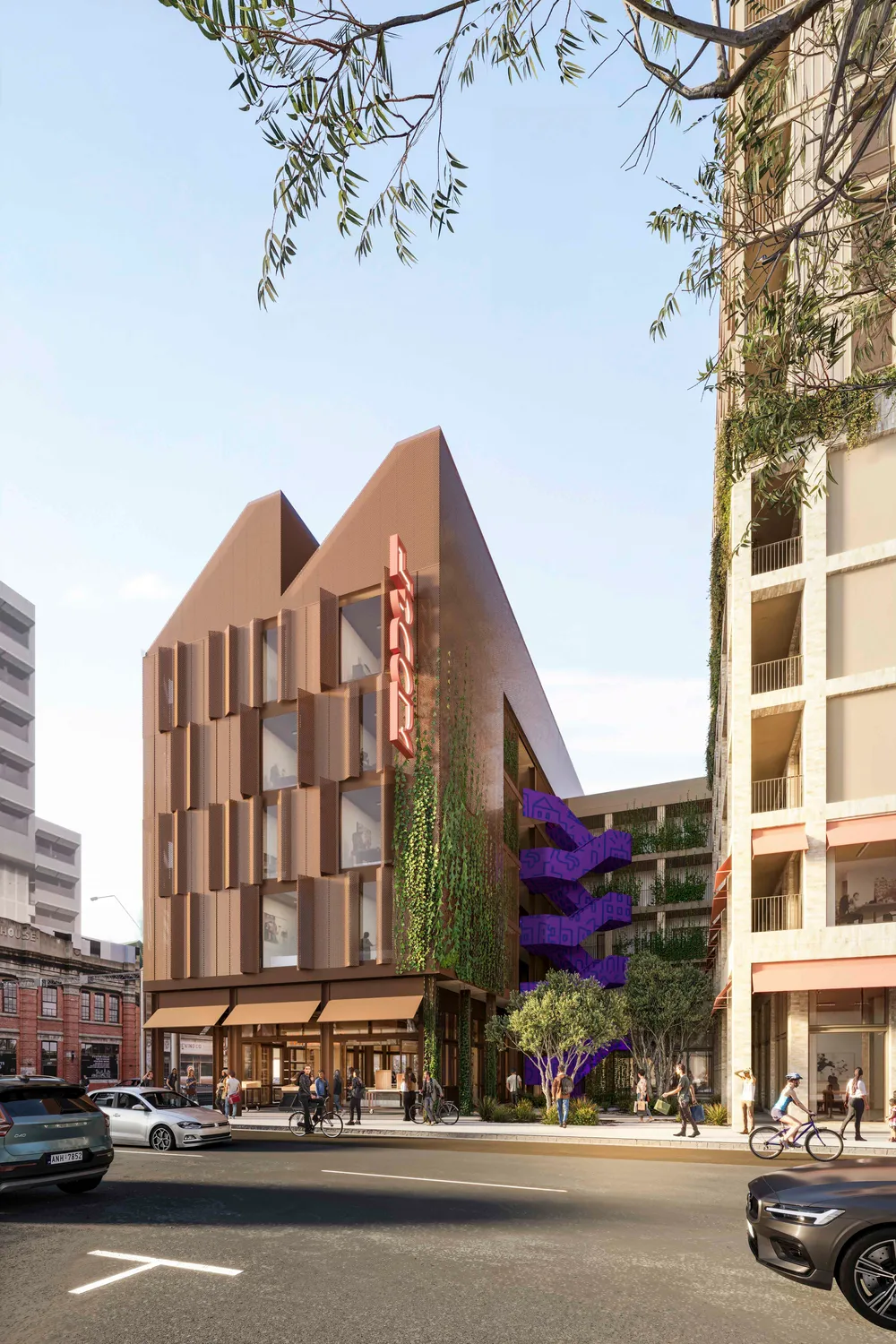
Performance-led Design
MMC is considered alongside the project's broader sustainability ambitions. With Passivhaus, Green Star and NatHERS targets, the design brings operational energy, embodied carbon, occupant comfort and construction methodology together as interconnected measures of performance.
Building Better at Scale
Together, these strategies demonstrate how MMC can support the delivery of high-performance housing at scale. At 276 Johnston Street, innovation is not about adopting technology for its own sake. It is about using material, manufacturing and design intelligence to achieve more with less.