
Last year, international education contributed $4.5 billion to our economy. It is a high-value export that attracts global talent, generates revenue, and builds New Zealand’s reputation for innovation and as a place to learn. The experience of the cities our students live in also contributes to their education, and many will stay and live their lives there. For the three, four or five years a student experiences the city they learn in, that environment and what it teaches them is as much a part of their education as their faculty or cohort.
However, to maintain this momentum we must recognise that students and their families are not just researching and choosing an international-standard degree, they also choose an international-standard campus.
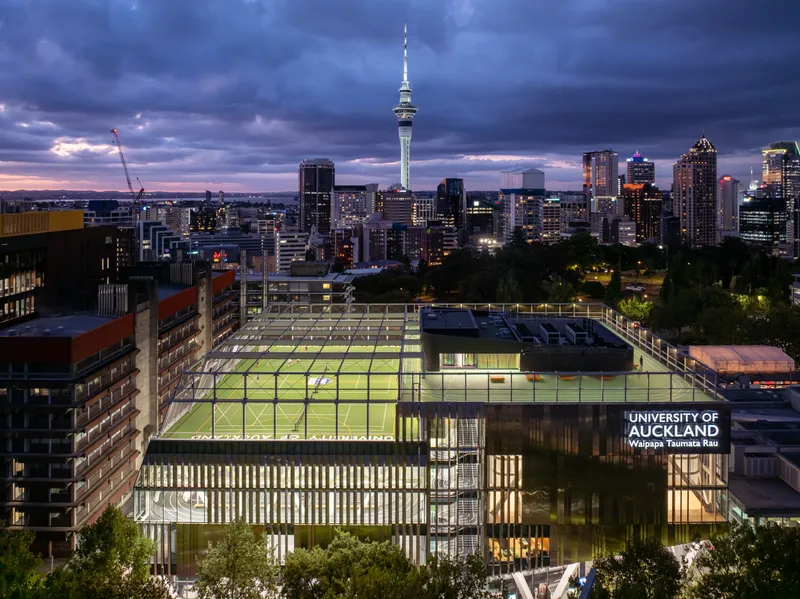
The University of Auckland’s recent ranking as #88 in Time’s Top 100 Universities of 2026 is a recent example of New Zealand’s performance in this arena. The scorecard included a) academic capacity and performance, b) innovation and economic impact, and c) global engagement. Namely, this retained the classical components used in higher education assessments, including the learning environment and academic outcomes.
Back in 2021, The university made a commitment to its Te Rautaki Tūāpapa Estate Strategy, a plan running through to 2030 that builds on and continues the transformative work in developing its campus carried out over recent decades. We can already see the outcomes which no doubt would’ve fed into its ranking.
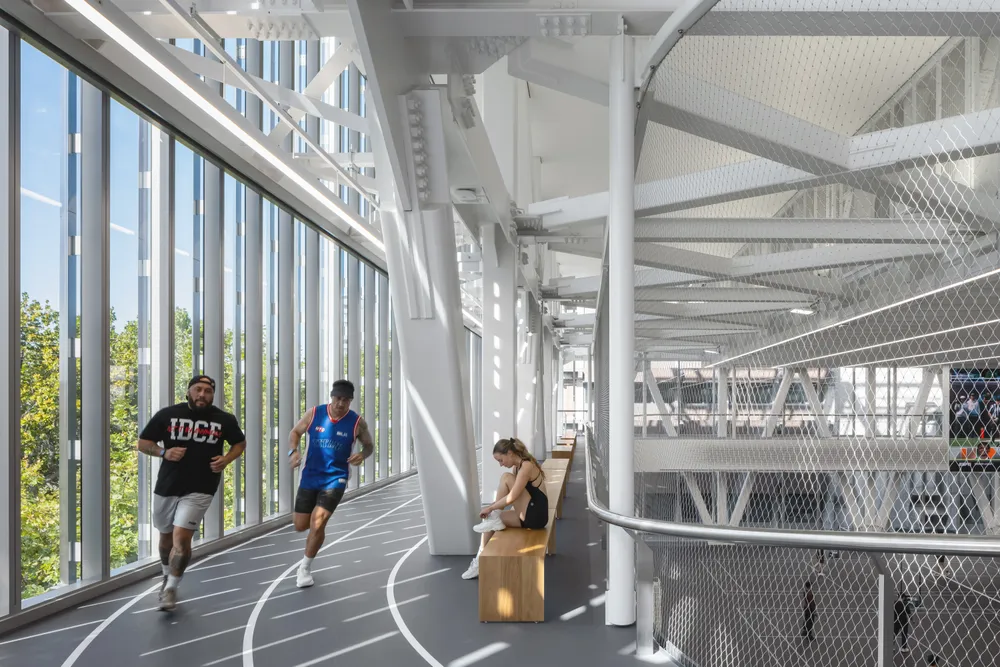
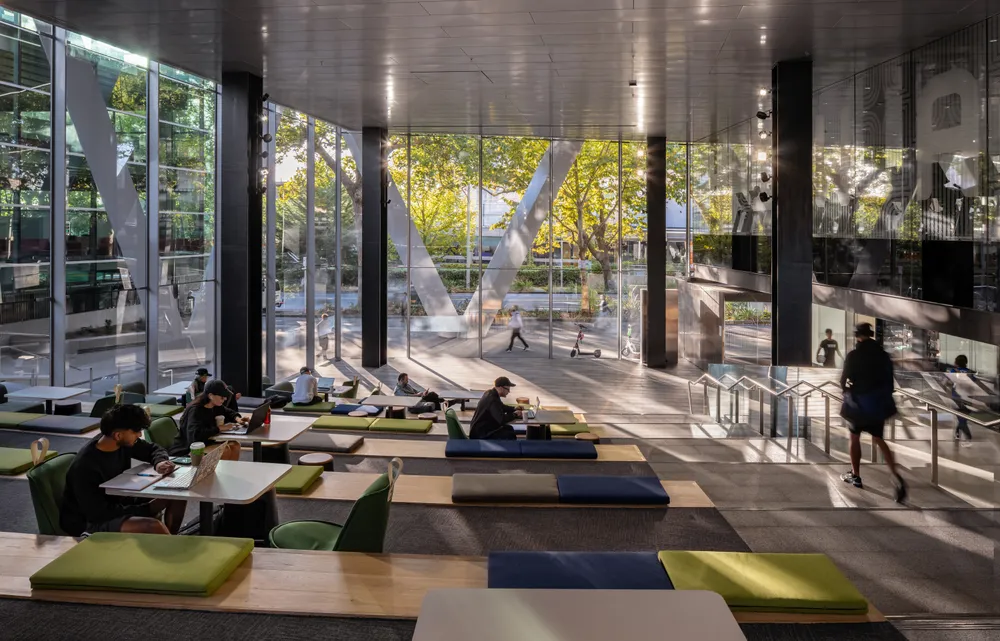
A standout example is HIWA, the University’s recently completed recreation centre.
Previous research carried out by the UoA’s Sport and Recreation team found a substantial increase in academic success among students who were using the University’s previous Recreation Centre. Students who attended just once a week achieved 19% more A-grades than students who weren’t engaging with the facility. This was higher for Māori and Pasifika students, achieving a 24% and 44% increase respectively.
With this knowledge, the new building was intentionally constructed in the heart of the student precinct as a tangible and ambitious expression of the University's commitment to student wellbeing, academic outcomes, and a more engaged campus community.
The location enabled its design to contribute to the decades-long goal of changing the character of the beautiful tree-lined spine of Symonds Street to be more supportive of pedestrians and students – to be a ‘people place’. Just like the earlier building, the visual and physical connection from Symonds Street right into the heart of the building brings the street to life. Further down Symonds Street, the recent Arts and Education project similarly acts to transform the experience of moving around the campus.
We see a similar transformation in Christchurch. After the 2011 earthquakes, the University of Canterbury roll dropped to just 14,000 and faced a daunting recovery. Yes there had been an earthquake, however students look ahead and make decisions based on what they see.
By investing progressively in campus life, student experience, and social infrastructure, UC hit a record-breaking 25,000 students last year. This growth has coincided with a 6% rise in Christchurch’s youth (15-24) population. The university didn't just survive the rebuild, it became a target destination for the next generation of Engineers, Scientists, Lawyers, Innovators. The value of this investment will echo through generations ahead as many of these students stay permanently in Otautahi.
However, we cannot afford to be complacent. While the iconic Universities and settings of Otago and Victoria (Wellington) are rightly celebrated for their heritage and tradition, we must ensure their physical infrastructure evolves. Around the globe, our competitors are investing at a scale that will easily present a more enticing option to the thousands of international students who are hunting for their next home, including increasing numbers of Kiwis who are looking and attending Universities overseas. The quality of the average campus in Victoria and New South Wales, and the experience of living in Melbourne or Sydney is increasingly the competitive environment that New Zealand’s universities operate in.
There are 87 universities ahead of the University of Auckland on Time’s list. There’s room for our academic institutions to do more and we can benchmark internationally for both inspiration and to make the value-case for investment.
In New South Wales and Victoria, state governments continue to treat their universities as engines for urban development and economic energy. A 2023 study out of Victoria University showed that international students were compelled to pursue their tertiary education in Australia for a myriad of reasons, including the physical environment and lifestyle, reputation of the institution and staff, life experiences and more. Students (and their families) are increasingly more discerning than the traditional stereotype; they know what they want and will look for a university experience that will set them up for life beyond Orientation Week.
The University of Melbourne, for instance, pioneered the ‘co-location’ model, physically housing startups and government agencies alongside researchers to accelerate the commercialisation of new technologies. In Sydney, UTS’ architectural revitalisation of the southern edge of the CBD, historically a gritty, industrial zone, has been enormously beneficial for the city. It’s now Sydney’s tech central and has even improved the city's environmental health.
Further afield, the National University of Singapore (NUS) campus houses R&D for the whole nation – including a precise 3D ‘digital twin’ of the city that uses real-time data to simulate traffic, energy use, and human flow. This allows the government to test urban planning strategies in a virtual world without disrupting the physical city – one that’s famed for its infrastructural efficiency.
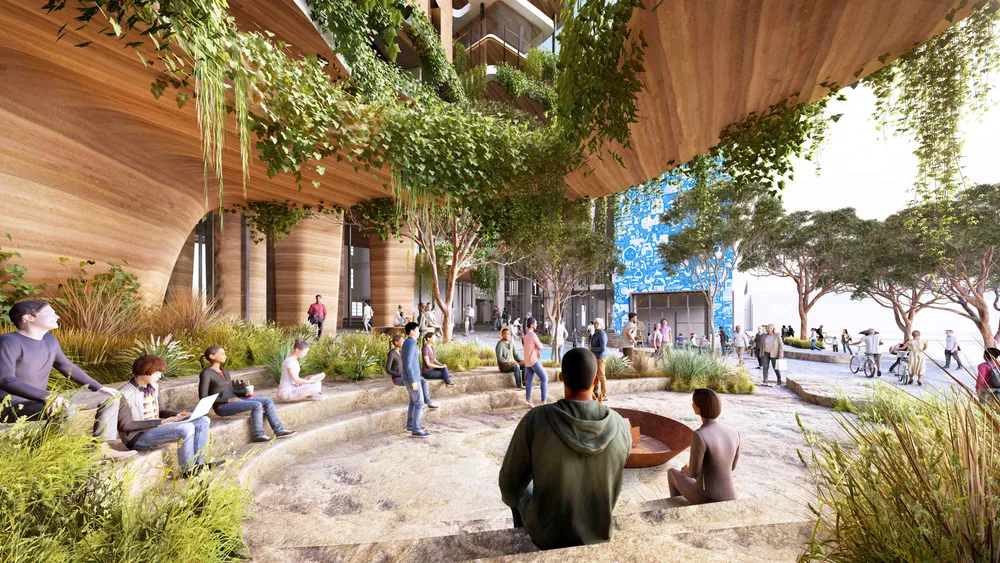
These examples of joined-up planning and investment demonstrate that the student experience, the role and place of Academia, research and development, government policy, tech-sector investment, and global reputation can all become closely intertwined in a university campus. The campus is increasingly so much more than the separated territories (and sovereignties) of the Faculty and Student Union buildings of the past. The highly mobile energy students bring to a campus is central to the connectivity that drives this.
For New Zealand to thrive in a knowledge-based global economy, we can view investment in our university campuses as essential seed funding. Every square metre of quality highly-performing social infrastructure we build is an investment in the future performance and desirability of our economy and the degree to which it can attract and retain the talent who will make it happen.
So as we welcome the class of 2026, let’s share in the excitement they have today, for what’s to come, and continue to build on it.